Bringing Complex Subjects to Life with Interactive 3D and AI
Interactive 3D learning experiences designed to help people understand, explore, and interact with complex products, systems, and ideas.
From Looking at 3D to Learning Through It
Some things are simply difficult to explain.
A machine can have hundreds of components. A technical process may involve interactions that are impossible to see from the outside. A historical site may no longer exist as it once did. And sometimes, even the best diagram or video can only show one perspective at a time.
This is where interactive 3D learning modules can make a difference.
Instead of asking people to passively watch a video, read a manual, or look at a static diagram, an interactive 3D learning module allows them to explore the subject themselves.
They can rotate around a model, inspect individual components, reveal hidden mechanisms, follow animations, interact with different parts, and learn at their own pace.
And with AI, the experience can go one step further.
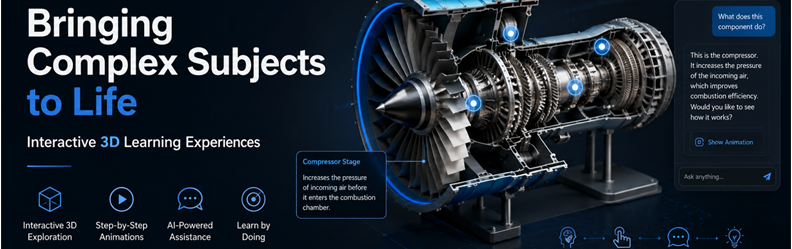
Users can ask questions in natural language, receive contextual explanations, and even ask the system to demonstrate something directly within the 3D environment.
The result is not simply a 3D model.
It is an interactive way of understanding.
The content rights of the above sample reserved to © BSH Hausgeräte GmbH
What Is an Interactive 3D Learning Module?
An interactive 3D learning module combines a detailed 3D environment with information, interaction, animation, and guided exploration.
Depending on the subject, a module can include:
- Interactive 3D models
- Exploded views and component identification
- Step-by-step animations
- Interactive hotspots and UI elements
- Technical explanations and contextual information
- Guided learning sequences
- Simulations of mechanical or physical processes
- Product demonstrations
- Embedded documentation and technical data
- AI-powered conversational assistance
The important part is that these elements are connected.
Instead of presenting information separately from the model, the information becomes part of the experience.
When a user wants to understand a component, they can see it, select it, inspect it, and learn about it in context.
Why Interactive 3D?
Understand Complexity
Complex systems become much easier to understand when their components can be visually isolated and explored.
Instead of looking at a diagram and trying to determine which part is which, users can interact directly with the object.
Learn by Exploring
People don't always learn in a straight line.
Interactive environments allow users to follow their curiosity. They can investigate a component, return to the larger system, explore another mechanism, and build their own understanding along the way.
Visualize What Normally Can't Be Seen
Some of the most interesting parts of a system are hidden.
Internal mechanisms, fluid paths, electrical systems, moving components, or microscopic processes can be visualized through animations, transparency, section views, and other interactive techniques.
Make Technical Information More Accessible
Technical documentation can be extremely valuable—but it can also be intimidating.
Interactive 3D provides a visual layer that makes complex information easier to approach, especially for people who are unfamiliar with the subject.
Create Memorable Experiences
A user who actively explores a system is doing something fundamentally different from someone who simply watches an explanation.
The experience becomes something they participate in, rather than something they consume.
When 3D Meets AI
One of the most exciting possibilities is combining interactive 3D with artificial intelligence.
But I don't see AI as simply another chatbot placed beside a 3D model.
The real opportunity is to make AI part of the interactive experience itself.
Imagine looking at a complex machine and asking:
"What does this component do?"
The AI can explain its purpose in simple terms.
Then you ask:
"Show me how it works."
Instead of giving you another paragraph of text, the experience can guide you through the relevant components or trigger an animation demonstrating the process.
You could ask:
"What happens if this valve is closed?"
Or:
"Explain the cooling system to me."
The AI can use the information available about the subject and provide an explanation that is relevant to what the user is currently exploring.
This creates a much more natural interaction:
Ask → Understand → Explore → Interact → Ask again.
The AI becomes an interface for learning, while the 3D environment provides the visual context.
Where Can These Experiences Be Used?
The possibilities go far beyond traditional e-learning.
Education
Interactive modules can help students explore subjects that are difficult to understand through textbooks alone.
Examples include:
- Engineering
- Physics
- Biology and anatomy
- Chemistry
- Architecture
- Technical education
Instead of simply studying a diagram of a mechanism, students can interact with it and see how its parts work together.
Industrial Training
Complex machinery and equipment are excellent candidates for interactive learning.
A module can be used to explain:
- Machine components
- Operating principles
- Assembly and disassembly
- Maintenance procedures
- Safety procedures
- Internal mechanisms
- Troubleshooting concepts
This can provide a safe environment for learning before someone interacts with the real equipment.
Product Demonstrations
A product doesn't always need to be physically present to be demonstrated.
An interactive 3D experience can allow potential customers to explore a product, understand its features, see how it works, and discover details that might otherwise require a salesperson or technical specialist to explain.
This can be particularly useful for complex or highly configurable products.
Marketing & Sales
Interactive 3D can transform a conventional product presentation into an experience.
Instead of showing a collection of renders or slides, customers can actually interact with the product and discover its features.
It can be used for:
- Digital showrooms
- Interactive product presentations
- Sales demonstrations
- Exhibitions
- Trade shows
- Online product experiences
Museums & Cultural Heritage
3D isn't only useful for modern technology.
Historical buildings, archaeological sites, ancient machines, and lost environments can also become interactive experiences.
Users can explore reconstructed environments, inspect objects, and learn about their historical context in a much more immersive way.
Sample Projects
The best way to understand the possibilities is to experience them.
Below are some examples of interactive 3D experiences I've created.
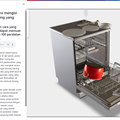
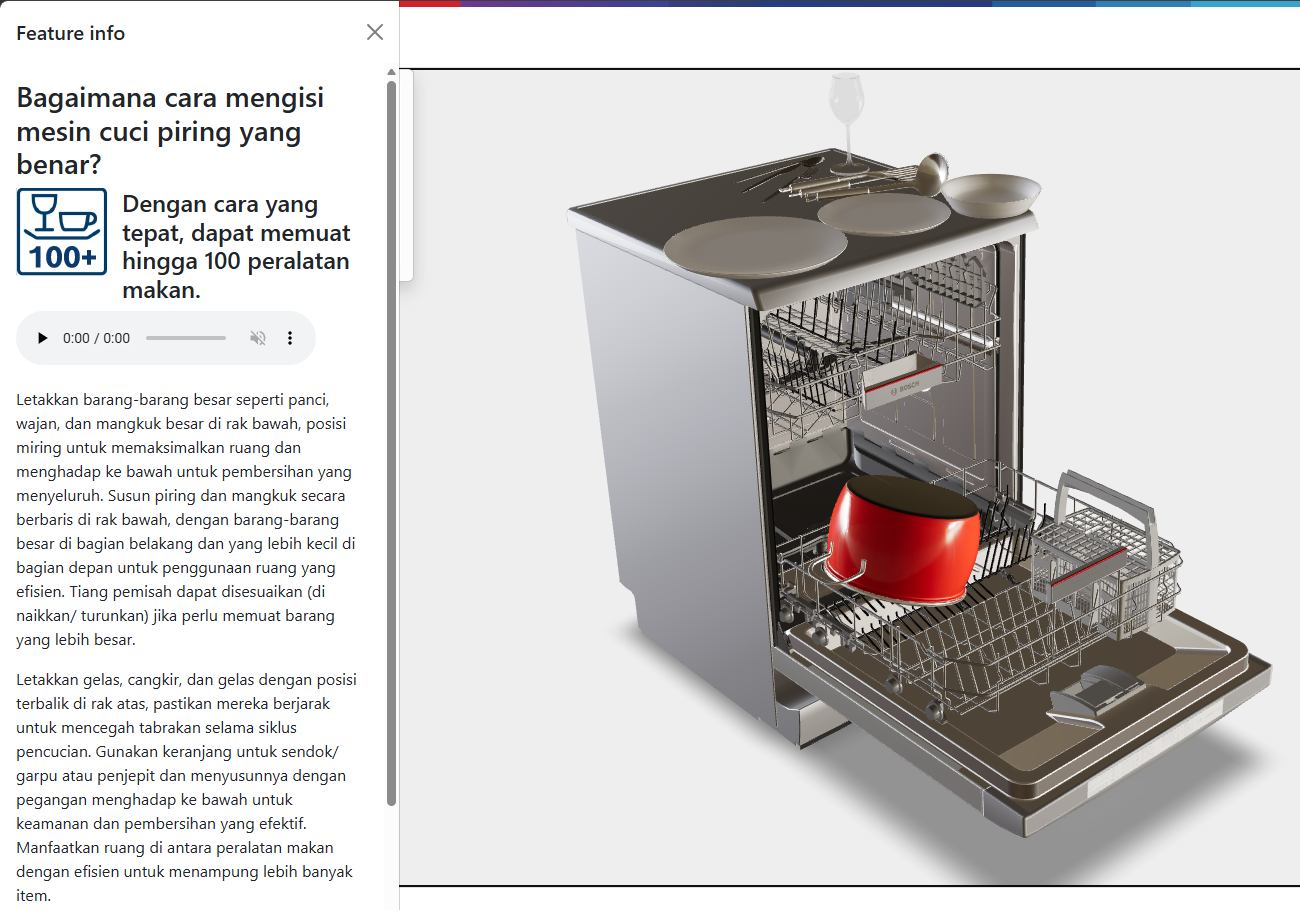
Dishwasher Usage
How to load pots/pans in a dishwasher properly? (Indonesian)
Most people still using appliances the wrong way! show how to use it properly.
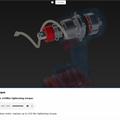
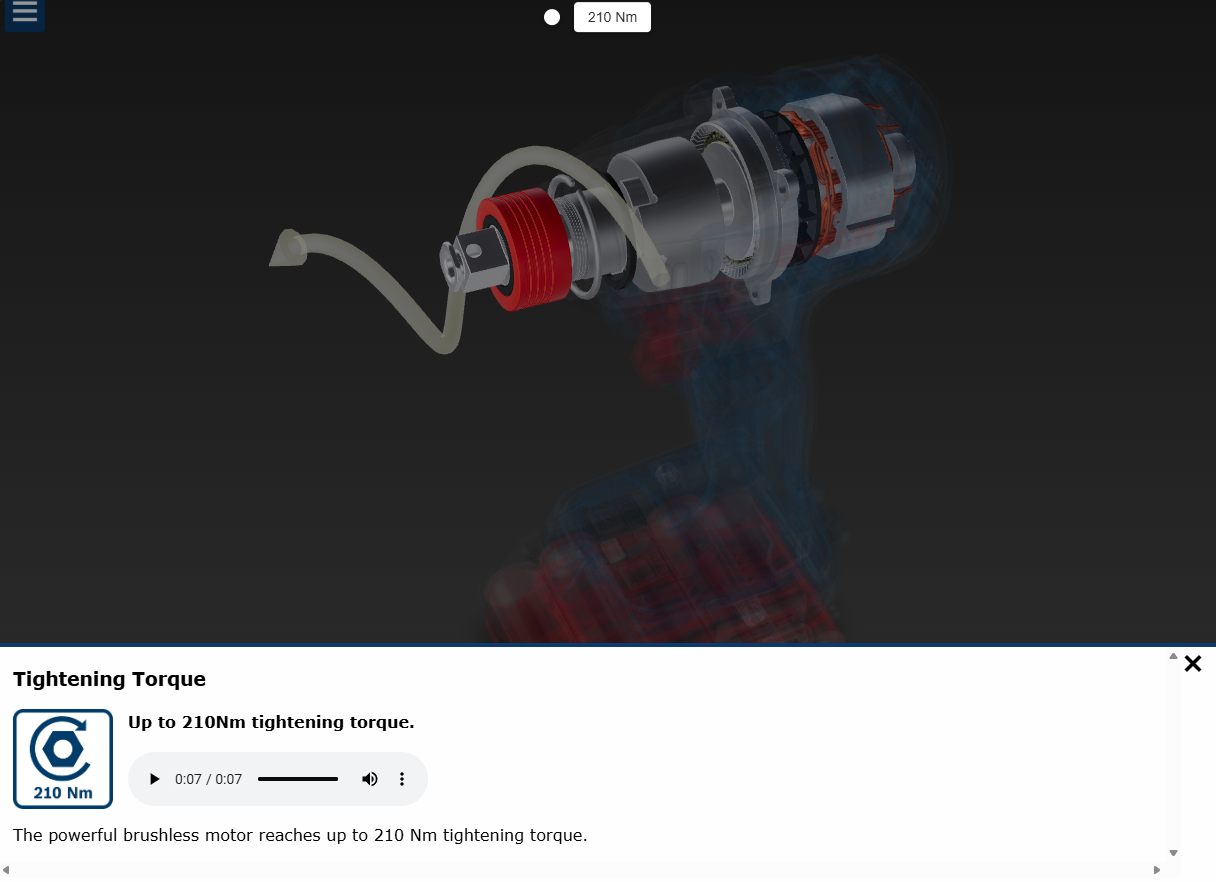
Power Tool - Drill
Showcase of a drill (English)
Show the power parameters of a drill.
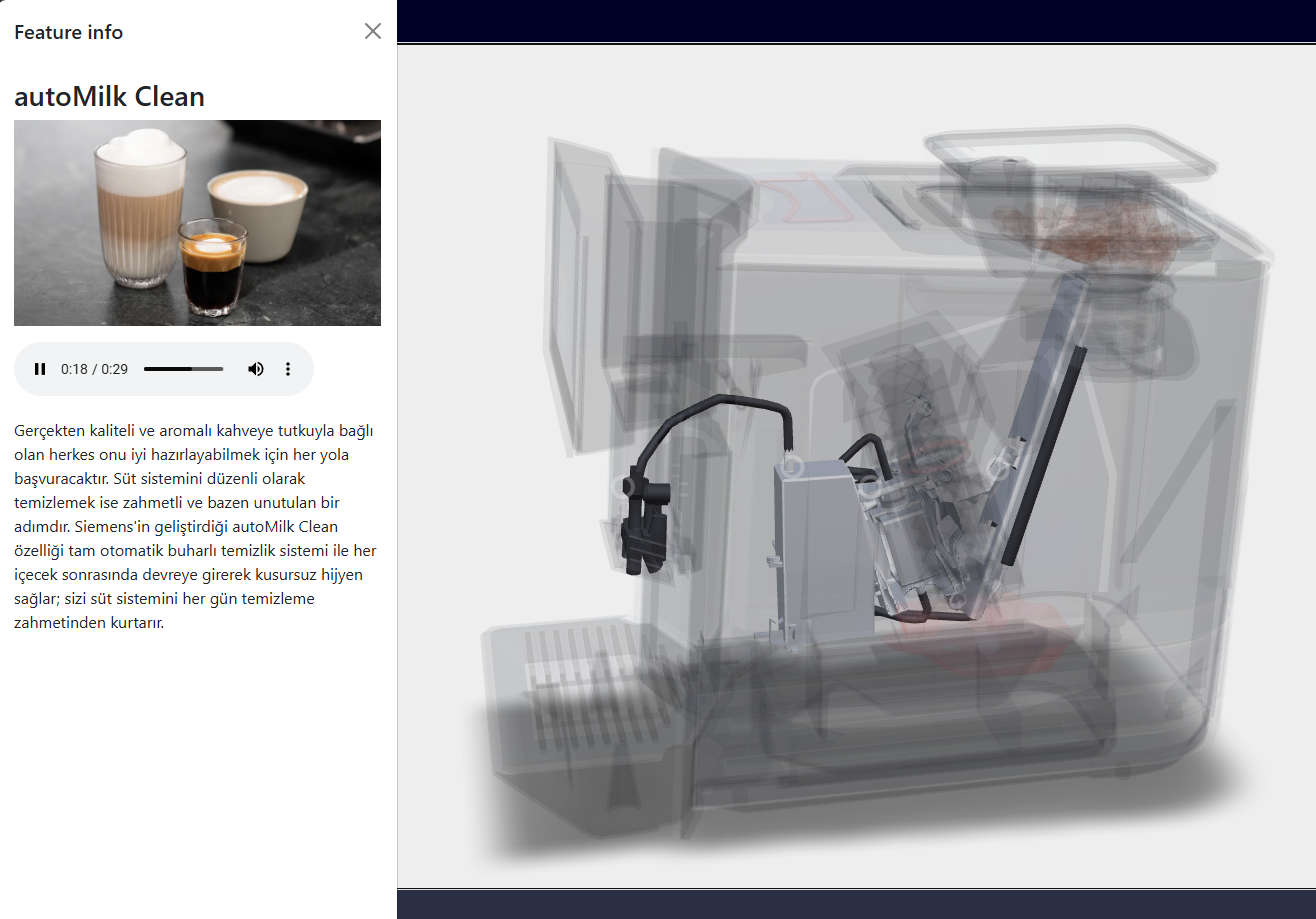
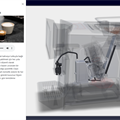 Fully Automatic Coffee Machine
Demonstration of fully automatic coffee machine capabilities (Turkish)
This module focuses on showing the main selling points of the coffee machine.
More Than a 3D Viewer
A 3D model by itself can be impressive.
But a 3D model doesn't necessarily teach anything.
The real value comes from combining different layers of the experience:
3D Model + Interaction + Animation + Information + UI + Data + AI
Each layer has a purpose.
The 3D environment provides visual context.
Interaction lets users explore.
Animation explains processes.
Information provides the knowledge behind what they see.
UI guides the experience.
Data and documentation provide deeper technical context.
And AI can bring these elements together through natural conversation.
This is what turns a 3D model into an interactive learning experience.
Designed Around the Subject
Every subject is different.
A mechanical component may require exploded views and animations.
A medical subject may require anatomical layers and guided exploration.
A historical reconstruction may need contextual information and storytelling.
An industrial machine may require technical documentation, operating procedures, and maintenance information.
That's why I don't approach these experiences as generic 3D viewers.
The interaction, information architecture, visual design, and AI behavior can all be designed around the subject and the audience.
The goal is simple:
Make the subject easier to understand.
Let's Make Something People Can Explore
Have a product, machine, process, system, or subject that is difficult to explain?
Instead of another PDF, presentation, or video, imagine giving people an experience where they can explore it themselves.
I create interactive 3D learning and demonstration experiences that combine visual storytelling, real-time interaction, and AI-powered assistance.
Whether the goal is education, technical training, product marketing, sales, or something entirely different, I'd love to explore what's possible.
Explore a Live Experience
or Get in touch for AI-Powered Demo →
Let's discuss your subject and explore how an interactive 3D and AI experience could bring it to life.
Complex subjects deserve more than static explanations.
Let's make them something people can see, explore, and understand.